Showing posts with label history. Show all posts

Wednesday, February 12, 2014

PIGEONS IN MILITARY


by Jim Greelis, AU Historian


In ancient times pigeons were the fastest way to send messages.  There are writings that report that the Persian King Cyrus used birds to send information, and the Greeks used homing pigeons to send news of Olympic victories. During the eighth century in France, only the nobles had homing pigeons and the birds were considered a symbol of power and prestige, until the French revolution changed things so that the common man could have them. Even Julius Caesar used homing pigeons to carry messages of importance.

In 1870 the Franco-Prussian war broke out and Paris was surrounded and cut off. The people in Paris figured out they could use hot air balloons to carry baskets of homing pigeons and other letters out of the city and the friendly French in the countryside could send messages back into Paris via the homing pigeons. This allowed the trapped people of Paris to communicate and maintain their hope and morale during the war. It was about this time that microphotography was developed in England, but used to great effect in this war to exchange many military instructions quickly via homing pigeon. The microphotography allowed a single pigeon to carry as many as 30,000 messages! The four month siege of Paris saw 400 birds deliver nearly 115,000 government messages and about a million private messages according to historians.


By 1914 when the war to end all wars (WWI) broke out the European armies were widely using homing pigeons in their war communications.  United States General John Pershing saw the birds in use and ordered the Army Signal Corp to begin putting together their own pigeon communication system. It is believed that over half a million birds were used by the warring armies as reliable communication.  These special birds had a 95 percent success rate in WWI delivering their messages and proved to be a lifeline for the troops on the front line. Remember this war was before modern radio and the telegraph was the other more-modern option for communicating.  But this wire based system was easily cut in two or tapped into by enemy forces if given the chance. The homing pigeons were used by others like aircraft pilots on reconnaissance missions, sailors off the  coast, and even tanks on the move. WWI was the height of homing pigeon use for military purposes. There were many pigeon heroes and several of these war birds received medals.

One of the most famous WWI pigeon stories to be told is that of the “lost battalion” in France that was saved by a pigeon named Cher Ami. This 600 man battalion was being shelled and wounded by friendly fire because they advanced too far into enemy territory. Their only hope of communication was by bird and Cher Ami gave it his all.  The German soldiers saw the bird take flight and began firing upon the bird wounding it but not enough to take away its will to fly the 25 miles back to the command post.  It arrived with one eye shot out, a bullet in its breast and most of the leg missing that had the message capsule still attached – hanging on only by a tendon. The message stopped the shelling and the battalion was later saved. After healing, Cher Ami went on to receive an honorary service cross and taken back to America and lived until 1919. Later he was mounted and then placed on display in the Smithsonian Institute.

When WWII broke out in the early 40’s the homing pigeon was brought back into service on both sides of the war. Many people do not realize that the head of the SS, Hemlic Hemmler, was also head of the national pigeon organization at one time and felt that the Nazis would benefit by taking over the national pigeon organization and the use of its members and birds. The Germans had 50,000 birds ready for use when the war had broken out. Unfortunately for America, the US Army Signal Corp did not maintain its pigeon program and had to rebuild it from scratch. The Corp solicited birds from fanciers that were willing to donate them, and looked for new draftees that had a poultry or pigeon background to work as pigeoneers.  

Although the radio was developed at this time to carry voice, whereas Morse code was used in WWI, the homing pigeon was sometimes an excellent choice for communicating while maintaining radio silence. As one might expect, radio direction finders were used by both sides to locate and take out each other’s forces. The homing pigeon was also found to be a capable airborne means flying a camera over enemy locations to learn more about troop strength and location. A camera was mounted underneath the pigeon behind enemy lines and allowed to fly home where the camera was examined. These photos might show actual troops and equipment or, if flying over a German town, might show certain type factories or other military targets for bombing.

Spies on both sides used pigeons to carry information and sometimes the birds were asked to fly the English Channel between Great Britain and France. The English and the Germans developed their own falcon program to intercept birds but they were just as likely to intercept one of their birds and stop the intended communication from ever arriving.

WWII came to an end and in 1956 the US Army shut down the Pigeon Corp. The service of the homing pigeon went dormant until the 1970’s when the US Coast Guard started using them again but in a different way. During the 1940’s pigeons in a Tufts University lab had proven the exceptional ability to pick out certain shapes and colors in exchange for food. The US Coast Guard decided the same abilities could be useful while searching for men and equipment in open waters so they set up some testing using a small observation bubble on the bottom of some their helicopters stationed near San Francisco. This project called Project Sea Hunt used three pigeons that faced 120 degrees from each other so that they covered the entire 360 degrees under the helicopter. The pigeons were 92 percent reliable in finding the test subjects or objects where humans were found to be in the 30-40 percent range. The project never got out of the testing phase and was ended in 1983 due to federal budget cuts so the birds did not get a chance to actually save any lives.

(Excerpts taken from the History Channels production called Animals in Action, and Jerome Pratt’s book titled Courageous Couriers.)

Wednesday, June 29, 2011

VINTAGE MOTORCYCLE & PIGEON CARRIER

AU member, Chuck Myles, gave us this wonderful look into the past.  He shared information and photographs of a vintage motorcycle + pigeon carrier used in World War I.  An article published in the American Iron Magazine in December 2005 provided background on this historically significant machine.


This 1917 Harley Davidson with pigeon carrier is reported to be the only one in existence, and housed at the Wheels Through Time Museum in Maggie Valley, North Carolina.

According to the museum, vintage bikes housed there are started and driven daily.  This one is no exception.

Apparently Steve McQueen, at one time, obtained the bike from one of the movie studios.  The gentlemen that owned the bike had all the documentation, including McQueen's auction paperwork.

The left side of the tank was the original 1917 olive drab military paint and decal work.  The right side of the tank was repainted and marked with what appears to be WWII detail.  It is supposed that the marking allowed for "double duty" of the bike in WWI and WWII movies, depending on which side of the bike faced the cameras.  The bike had a few brackets that were at first unidentifiable.  A few years later at a motorcycle meet, it was discovered that a rare messenger pigeon carrier was available.  It is the only Cygnet (Cygnet Car Carrier Company) pigeon carrier known to exist.  When matched up with the motorcycle, they were found to be a perfect match.  It seems the bike and carrier were actually a unit that had become separated over time.

For pigeon fanciers and wartime history buffs, this is a must see if you are ever in that area of North Carolina.  www.wheelsthroughtime.com

Tuesday, May 3, 2011

FESTIVALS FEATURING HOMING PIGEONS

Join us at the upcoming festivals to learn more about racing homing pigeons.


May 14, 2011 1-4pm
Family Fest
Hardin County Fairgrounds
301 11th Avenue, Eldora, IA 50627
     The event is open to families everywhere who use or are interested in Hardin County family resources.  There will be no charge for admission and all families will receive a free resource guide.
     Many family-friendly activities and performances have already been scheduled including information on racing pigeons, Llama petting, a bicycle rodeo, musical performances and environmental education.


May 15, 2011 10-4
Homing Pigeon Expo and Family Fun Day
Vernon County Fairgrounds
Centennial Blvd, Nevada, MO 64772
Pigeon Show in Poultry Building
All other activities in Home Economics Building
     Enjoy the pigeon show, auction, food and fun!  Bring the family to have fun and learn about homing pigeons.  Hear the history of the homing pigeon during wartime.  Kids, have fun on the jumping gym and horseshoe tossing.  Learn about the upcoming 2012 Breast Cancer Relief Race.
     There's no admission fee.
     View the awesome sight of 200 birds in a spectacular release.  Drawings and prizes throughout the day.  Midwest Racing Pigeon Club and Sac-Osage Club will share information about the care of the birds.  AU's Veterans Affairs Chairman, Bill Desmarais will share important historical information about homing pigeons serving alongside their Pigeoneers during wartime.  National representative Deone Roberts will be on hand to share membership information.


Join us!


Monday, March 28, 2011

TRIBUTE TO MILITARY SERVICE MEMBERS

Featured in the 

TAUNTON DAILY GAZETTE

Taunton Area Vietnam Veteran’s Association stresses importance of finding missing service members

By MARC LAROCQUE
Posted Mar 27, 2011 @ 11:19 PM


Taunton Gazette photo by Mike Gay


The Taunton Area Vietnam Veteran’s Association held its 29th annual POW/MIA Remembrance Ceremony at the Vietnam Veterans Memorial on Church Green Sunday at noon. Nearly 100 veterans, politicians, students and community residents paid tribute to those who served in Vietnam and most notably those who never came back.


Bob Silvia, the president of the Vietnam veterans group, gave opening remarks and stressed how crucial it is for the government to fund the recovery and return of missing service members.


“Our MIAs are scattered all over southeast Asia, South Vietnam, North Vietnam, Laos, Cambodia and even off the coast of China,” Silvia said. “They are waiting to be found and it is up to us to make sure that our government continues to fund research teams each year to look for and recover the remains of our POWs.”


The group said there are 39 Prisoners Of War and Missing In Action soldiers from Massachusetts, and a total of 1,699 missing service members in southeast Asia.


Taunton Area Vietnam Veterans Association Chaplain Chip Metzger delivered a prayer for the Prisoners Of War and the Missing In Action.


“Father, known to you are the whereabouts of our brothers, who have been waiting so long to be returned home,” Metzger said. “We ask thee Father thy blessings to be upon the leaders of this great nation that they do all in their power to bring them back home to the land that they served with honor, the land of their birth.”


After several speeches, poems and the ceremonial releasing of doves and homing pigeons, members of the crowd took symbolic dog tags with the names of the missing, read out the names and hung up the tags together on a post.


Bill Desmarais, of the Marine Corps League and on behalf of the American Racing Pigeon Union, explained the meaning behind the doves and homing pigeons.


“We will send to the heavens the Marine Corps League’s doves of peace, representing what every veteran has fought for: Peace,” Desmarais said. “The doves of peace will be joined on their heavenward journey by squads of multi-colored homing pigeons representative of the many races and cultures that have served and sacrificed for freedom.”


Desmarais added that the homing pigeons were significant because they were used by U.S. forces during combat throughout the years, helping to save the lives of civilians and military personnel.


Taunton Mayor Charles Crowley said he was very proud of the annual POW/MIA Remembrance Day and the city’s history of honoring Vietnam veterans.


“Here in Taunton we dare to be different,” Crowley said. “We’ve always been in strong support of our veterans throughout the generations, especially here during the 1960s when it was at the time a very unpopular war.”


Crowley recounted how the Vietnam Memorial in Taunton was dedicated on Oct. 20, 1968, when 2,000 residents got together on the Church Green for the unveiling of the memorial tablet.


“(More than) 2,000 citizens joined here amid a light rain to pay tribute and dedicate this tablet,” Crowley said.


He said the ceremony was attended by the parents of William Murphy, the very first soldier who died in the Vietnam War.


Speeches were also made by state Sen. Marc Pacheco, D-Taunton; state Rep. Shaunna O’Connell, R-Taunton; U.S. Sen. John Kerry, D-Mass.; U.S. Sen. Scott Brown, R-Mass.; and U.S. Rep. Barney Frank, D-Newton.


Jane Van Gyzen, a Gold Star Mother and stepmother of Lance Corporal John Van Gyzen IV who died in Iraq in 2004, read a poem called “Remember Me.”


“‘Remember me with smiles and laughter for that is how I will remember you,’” said Van Gyzen, who was recently made an honorary veteran of the Taunton Area Vietnam Veterans Association. “‘If you only remember me with tears and sorrow then don’t remember me at all.’ Our brave soldiers will be remembered for their love of life and their love for their country.”


Dennis Proulx, vice president of the Taunton Area Vietnam Veterans Association, updated the crowd on the latest information on the cause of MIAs and POWs.


Proulx said of the 1,699 missing, there are 477 in South Vietnam, 824 in North Vietnam, 332 in Laos, 59 in Cambodia and seven off the coast of mainland China.


Proulx said although the event focuses on the lost from U.S. operations in Vietnam, the group also remembers the missing from previous wars.


“There are 8,005 still missing from the Korean War,” he said. “And there are 74,064 missing from World War II. That’s a lot of servicemen.”


Proulx said those interested in the cause to recover the missing can find more information at the military website, www.jpac.pacom.mil.
Contact Marc Larocque at mlarocqu@tauntongazette.com

Read more: http://www.tauntongazette.com/archive/x1315031819/Taunton-Area-Vietnam-Veteran-s-Association-stresses-importance-of-finding-missing-service-members#ixzz1HuCwff24

Tuesday, February 1, 2011

FLORIDA RACING

2/1/2011 12:41:00 AM
Nearly 2,000 racers sprint from Lake City in an event that goes back thousands of years
By Karl Burkhardt

     Nearly two thousand racers left Lake City Monday morning for a 120-mile sprint to Spring Hill, Fla. They arrived before lunch.


     Three people gathered for the start of the race in the open area that had been the K-Mart parking lot. The only other spectators were a flock of curious gulls, sitting on the pavement.
     Jim Milligan of Gulf Coast Homing Club comes to Lake City about 20 times a year to release racing pigeons.
     There were two starts Monday. The first start, scheduled for 8 a.m., was postponed for an hour because a squall line was passing across the race course. About 1,400 birds sprang from a large trailer as 52 doors opened simultaneously.
     At 9:30 a.m., a smaller group of young pigeons in training were released.
     Gulf Coast Homing Club, the largest homing club in the United States, has events every week. Some races are 100 miles, starting in Alachua. Last week, a Saturday race started in Fargo, Ga., with 2,000 pigeons flying 150 miles.
     A 500-mile race starts north of Chattanooga, Tenn., and a 600-mile race is from Whitehouse, Tenn. Depending on the speed and direction of the wind, racers go 600 miles in 10 to 11 hours.
     “Racing pigeons fly about 45 mph. When there is a good tailwind, we’ve had races that are as fast as 70 miles an hour,” Milligan said. “In a headwind, they fly as slow as 30 miles an hour.”
     The Gulfcoast Homing Club is 35 miles north of Tampa and they have about 200 members. Each bird carries a numbered leg band and the club issues 28,000 bands a year to its members.  Milligan is a club member, but he does not race in events where he released the birds.  “I belong to a one-loft race, the Flamingo International Challenge,” he said. “People send pigeons to our loft. We train them and race all the birds to one loft.” . . .  “Some people express concern that the pigeons spreading disease,” Milligan noted. “But these are healthy birds. Owners take care of them like you would care for a race horse or a pedigreed dog.” If a bird is ill, they put it in quarantine and nurse it back to health.
     Racing pigeons are sold at auctions. Bidding at some of the online auctions starts at $100 to $500 or more for a bird.
     Before they became popular as a racing sort, they were called homing pigeons and were used by Egyptians and Persians to carry messages 3,000 years ago.
     According to Wikipedia, “Birds were used extensively during World War I. One homing pigeon,Cher Ami, was awarded the French Croix de guerre for his heroic service in delivering 12 important messages, despite having been very badly injured.
     “During World War II, the Irish Paddy and the American G.I. Joe both received the Dickin Medal, and were among 32 pigeons to receive this medallion, for their gallantry and bravery in saving human lives with their actions.
      “Homing pigeons were still employed in the 21st century by certain remote police departments in Orissa state in eastern India to provide emergency communication services following natural disasters. In March 2002, it was announced that India's Police Pigeon Service messenger system in Orissa was to be retired, due to the expanded use of the Internet . . . 

Wednesday, August 25, 2010

FAST FLYING FEATHERS

August 25, 2010

Local residents raise, race pigeons
By Tim Mandell
Register News Writer
Photography Nancy Taggert


RICHMOND — A pair of Richmond residents have formed a unique partnership.

Former co-workers John Hayes and Robbie Robbins spend their free time raising and racing pigeons.

Hayes retired three years ago from his job as custodial foreman at Eastern Kentucky University. Robbins works at EKU as an operator at the heat plant.


While working together, they discovered they shared a love of pigeons, each having been raised around the birds.

Since retiring, Hayes has constructed five pigeon lofts on his property and Hayes and Robbins own roughly 300 racing pigeons.

One of those pigeons, Lucky Seven, flew earlier this month from Orlando, Fla., to Kentucky, covering more than 700 miles in two days.

That feat is a Kentucky long-distance flying record, Robbins said.


Most of their pigeons were bred around Thanksgiving and were born at the beginning of this year.

Once the pigeons were comfortable with their surroundings, Hayes and Robbins began teaching them to race.

“We let them fly around here for a while, just to let them get used to the place,” Hayes said. “You just have to be patient with them.”

When the pigeons were ready to race, the first toss was done a quarter-mile from the lofts.

After that, they released the birds five miles away, then 10 miles, then 20 miles, and finally, 100 miles away.

Pigeons fly about 45 miles per hour and have been known to reach 110 miles per hour with the right tail wind, Robbins said.

“They’re the only other animal in the world that recognizes themselves,” Robbins said. “They have about all the same traits that humans have.”

Robbins, who often writes pigeon fiction for the magazine “Racing Pigeon Digest,” is like an encyclopedia of the history of pigeons.

He rattles off stories of pigeon heroics from World War I and World War II and knows the names of well-known pigeons and their breeders and racers.

Hayes spends most of his time in his backyard with the pigeons, where he has formed a strong bond with the birds.

“I’m out here all the time,” Hayes said. “I do some yard mowing on the side, but when I get done, I come out here and watch them fly around.”

They have loaned their pigeons to be used at athletic events, weddings and even funerals.

At funerals, four pigeons are released, representing the Father, the Son, the Holy Ghost and the soul, said Robbins.

They search for perfect matches for breeding and isolate those pigeons in cages.

Typically, the female lays two eggs, which take 18 days to hatch. Once the babies are a few weeks old, Hayes and Robbins place a bond on their leg signifying the year of their birth, the national and local groups they belong to and a serial number that identifies Hayes and Robbins as the owners.

Inside the lofts, there are cubby holes. Each bird usually claims one cubby hole as their own, Hayes said.

When the birds are let out to fly, they often form a routing pattern and may spend hours flying around before returning to the lofts, Hayes said.


What Hayes and Robbins seem to most enjoy is racing the pigeons.

Pigeon races are conducted quite frequently and the cash prizes sometimes reach five figures, Robbins said.

Hayes and Robbins are currently training their pigeons for upcoming races.

Typically, these races may pit teams against each other, with the fastest pigeon to return to its roost declared the winner, Robbins said.

Monday, August 2, 2010

ON THIS DAY IN HISTORY

Monday, August 2nd marks the 100 year anniversary that:

In Washington D.C., Mr. D.C. Buscall of Maryland outlined the value of a new national organization and presented samples of the "new and beautiful band, of exquisite workmanship and original design which is to adopted as the national marking ring for the American fancy, and thereby reduce to one uniform band the many mixed and indifferent types now used". After the many good points of the new Union were clearly explained and discussed a motion by Mr. W. F. Dismer of Washington D.C., seconded by W.F. Sarton, that the American Racing Pigeon Union be formally organized was unanimously carried by those in attendance. It was further explained that no further action beyond appointing a committee to take care of the preliminary organization would done at that time.

Taken from The Homing Exchange, the next formal meeting would occur in December 1910.

Tuesday, July 27, 2010

THE PARTY IS ON!


Celebrate our first 100 years.
Share a toast to the next 100.
The AU's Centennial Convention is right around the corner.

Activities begin on Wednesday, November 10, and conclude on Sunday, November 14, 2010.
DON'T WAIT - MOST ROOMS IN OUR BLOCK HAVE ALREADY
BEEN RESERVED.

Questions? Call the AU office at 800-755-2778

Tuesday, July 20, 2010

WORLD WAR II'S DARING PIGEONS

http://www.lynnnews.co.uk/lifestyle/fly_fly_fly_world_war_ii_s_daring_pigeons_remembered_1_674174

Lynn News, out of the UK reports:
Fly, fly, fly . . . World War II’s daring pigeons remembered
Published on Tue Jul 20 15:52:32 BST 2010


DURING the war, the country was known for the bravery of its airmen with epic encounters such as The Battle of Britain etched in the memory for years to come.


But what might be less well-known is the role another highly-significant air-borne force played in the fighting - the humble pigeon who proved a vital way to relay messages.

At the outbreak of World War II. 7,000 of Britain’s pigeon fanciers gave their birds to the war effort to act as message carriers.

Such was their role the National Pigeon Service was formed during which nearly 250,000 birds were used by the army, RAF and the Civil Defence Services including the police, fire service, Home Guard and even Bletchley Park.

Since the beginning of the 20th century pigeons have been used for surveillance purposes, escalating during both world wars. In World War II, every military aircraft leaving Britain was recommended to carry two.

According to the Royal Racing Pigeon Association, aircraft carried pigeons in special watertight baskets so if the aircraft had to ditch, the pigeon could take a message back to land.

“Thousands of servicemen’s lives were saved by these heroic birds that often flew in extreme weather and sometimes under fire,” a spokesman said.

Pigeons carried messages in special containers - photographs of which are just one of the items on show at a special Lynn exhibition now being held.

Birds were dropped by parachute to help the war effort, photos of pigeons in flight also part of the display which is taking place at The Shakespeare Barn at Lynn Arts Centre galleries.

Australian-born artist Lyndall Phelps was particularly interested in devices that denied pigeons their natural behaviour, such as the message carriers that were strapped to their bodies with elastic harnessing, and being attached to parachutes.

Replicas of the harnesses are also included in the exhibition which, called The Pigeon Archive, includes a range of differing media from large-scale photography to objects which have been meticulously made.

It also includes fascinating video footage taken from a bird in flight.

The enigmatic film, shot in 2008, shows a pigeon’s eye view of the Cambridgeshire Fens after a light-weight surveillance camera was strapped to a pigeon’s body and the bird then released.

It is poignant that, in reality, large numbers of pigeons lost their lives, through starvation, being killed by the enemy or exhaustion and exposure due to harsh conditions on homing flights.

“This exhibition is sure to make you reconsider the dubious reputation of these humble birds,” a spokesman for the arts centre said.

The exhibition, which opened on Sunday (July 18), takes place until Saturday, August 14.

Friday, July 9, 2010

FAMILY FUN RACING PIGEON EXTRAVAGANZA!


NEWS ADVISORY
CONTACT: Pat Kelsey
815-626-9300
pkelsey@skiptracers.com


WHAT: A fun day for the family to learn about racing Homing Pigeons, includes:

· Kids Fishing Tournament
· Prizes
· Free Lunch
· An amazing bird release – 1000 pigeons!
· Animal Menagerie for the Kids
· Fire Trucks
· Armories
· Mounted Patrol
· Educational & Entertaining Videos
· Actual Pigeon Loft for viewing.
· Fire Engine Rides
· Military Tribute with White Bird Release
· Messages by Pigeon to Governor Quinn & President Obama
· Messages to Friends & Family

So much fun! So much learning! And it benefits the Sauk Valley Youth Racing Pigeon Program. There, kids learn life skills as they provide the finest of care, nutrition and training for their registered and pedigreed feathered athletes that travel as far as 600 miles in a day at speeds over 50 miles per hour.

WHEN: Saturday, July 17, 2010
Opens 9:00 a.m., continues all day.

WHERE: Oppold Marina
532 Stouffer Road, Sterling, Illinois

VISUAL& INTERVIEW OPPORTUNITIES:

· Amazing Bird Release
· Witness messages to the Governor and the President
· Examples of clocking and loft equipment, along with informative brochures, will be available.
· Local pigeon experts from the Rock River Valley Racing Pigeon Club will demonstrate handling of the birds and discuss pigeon racing and the care of these registered pigeons.

Wednesday, June 9, 2010

PIGEONS VISIT FLIGHT ACADEMY

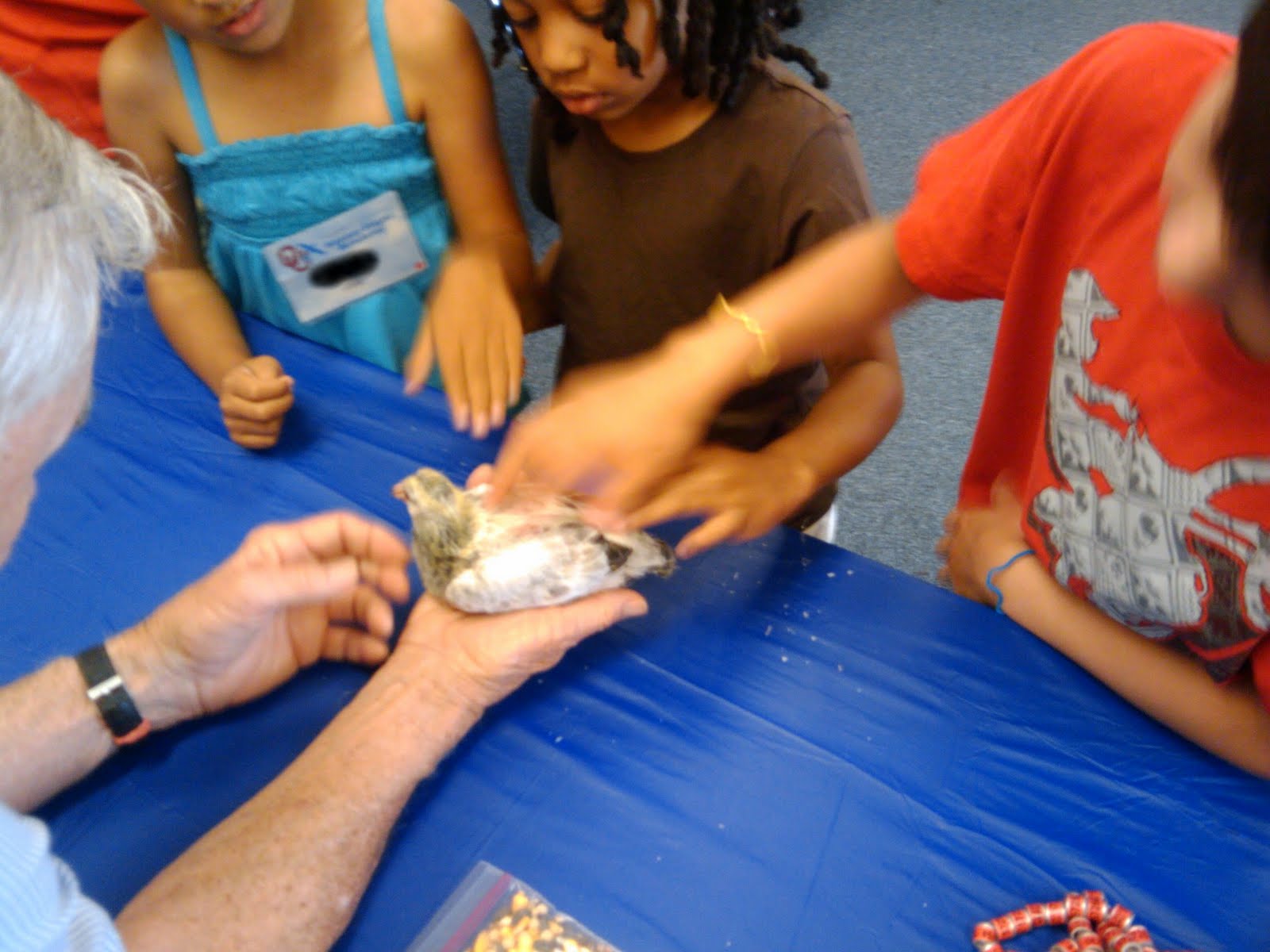
The University of Oklahoma Sooner Flight Academy camps challenge students ages 6-18 to learn scientific and mathematic principles using aviation education. Through hands-on activities, students experience the effects of science, math, engineering and technology as they participate in exciting aviation activities during flight camp.


AU member Bill Jordan visited this year's first camp session to teach students about racing Homing Pigeons. It is a hit with students and staff each year.

Tuesday, March 23, 2010

SCHOOL RACING LOFT


CLARKDALE FFA

Thanks to all who helped with the school projects.
All lofts are ready for birds when you are ready to ship.
You can see construction on the newest loft at www.clarkdaleffa.com

Click on Photo Gallery and you will see Pigeon Loft in the gallery.

We have birds in the loft now from:
Charlie Moore, MS
Larry Smith, MS
Sue Ann Holmes, MS
Tommy Cox, AL

Pete has set May 2 has the pick up day for Spring Hill, FL.

Please encourage other flyers to enter birds in our race.

Thank you,
Ronnie Shumaker
rshumaker@mpsd.k12.ms.us

Thursday, February 18, 2010

Homing Pigeons and the Signal Corp

Pigeons play role in Signal Corps history

Charmain Z. Brackett Correspondent


A variety of animals have been used alongside Soldiers in the history of the military. Soldiers rode horses, and military working dogs sniff out bombs.

During World War I and World War II, homing pigeons played their part in helping the Signal Corps fulfill its mission.

“The Signal Corps started using the pigeon in 1916,” said Robert Anzuoni, Signal Corps Museum director.

The use of carrier pigeons dates back more than 2,000 years to the ancient Roman Army. Many countries used pigeons during World War I.

One of the most famous pigeons of World War I was Cher Ami. He carried 12 important messages including one which saved American Soldiers trapped behind enemy lines in France in October 1918.

Surrounded by the enemy and with American artillery coming at him, Maj. Charles Whittlesly sent out a message on Cher Ami with the troops’ exact location. Cher Ami was shot at and wounded, but managed to fly 25 miles in 25 minutes. He got the message through and the American artillery ceased, saving 200 men.

That last flight severely wounded the bird and he lost his leg. The men of the unit he saved carved him a wooden leg.

Cher Ami received the French Croix De Guerre. The bird is on display at the Smithsonian Institution’s National Museum of American History. A portrait of the bird is on display at the Signal Corps Museum.

A pigeon could cover an average of about 300 miles; with the longest pigeon journey recorded of 1,000 miles, according to Anzuoni.

“They would carry information about enemy position, resup- ply – standard memo traffic,” he said.

During World War II, pigeons carried encrypted messages concerning the invasion of Normandy and other battles. They were vital in getting messages to hard to reach areas such as the mountains of Italy, he said.

Most of the people who served as pigeon trainers and handlers in the Signal Corps had worked with pigeons in the civilian world, he said, and some were familiar with breeding and training them.

Pigeons would be taken miles away from their home station and a capsule attached to their leg held the message. The pigeon would be released and fly home.

One brave pigeon of World War II was Liles Boy. The preserved bird is on display at the Signal Corps Museum. Liles Boy carried 46 messages to the front lines in Italy. He is credited as delivering several of the most important messages of the Italian campaign according to the exhibit.

Pigeons were used until 1957.

Wednesday, November 25, 2009

WAYWARD PIGEON NOT IN KANSAS ANYMORE

San Francisco Chronicle reports:


Cirrus the wonder pigeon will fly across the country early next week on his way back to his home in a suburb of Wichita, Kan. This time he'll take the plane.

His flight inside a special U.S. Postal Service mailing package will be the last chapter of a saga that took the bird from his pigeon loft in Kansas to a patio deck in Point Richmond on the shores of San Francisco Bay. His trip covered 1,700 miles and took more than four years.

Maybe he flew here, but no one knows for sure.

"It is absolutely amazing," said Olene Sparks, who discovered the pigeon on her deck on a cloudy afternoon last week.

She could tell this was no ordinary pigeon. For one thing, he was almost pure white, with a few gray marks. Most pigeons around here are muddy gray.

For another, the bird had an aura about him.

"He wouldn't leave," Sparks said. "He kept wanting to come into the house. I could see that he was a sweet bird, a nice bird."

Sparks is fond of animals, especially cats. But her cats are too timid to approach a pigeon with personality, so she brought the bird inside and took him under her wing. She knew neighbors who were fond of birds. Alma Wainscott, who has parrots and cockatoos, lent a large birdcage. Kevin McMullin knew about pigeons from his experience in rescuing a couple of orphaned pigeon chicks.

Wainscott and Sparks named the bird Cirrus.

"He came out of a cloud, and he's white," said Sparks. "So it fits."

As it turned out, Sparks was right: Cirrus is no wandering street pigeon; he is a thoroughbred and his trip West was an odyssey.

Sparks and her neighbors noticed that the wayward pigeon had a blue band on his right leg. It said WICHITA KS and had a serial number. There's no place to hide in the Internet age, even for pigeons, which can live up to 15 years. An Internet search led the pigeon detectives to the Wichita Friendly Pigeon Flyers Club. The serial number led to Chuck Miller, who works in the aircraft industry, lives in the Wichita suburb of Haysville and is a pigeon racer.

"I remembered that bird, of all the birds I have," he said in a telephone interview. He has about 100 birds, 50 racers and 50 breeders.

Miller said he bought the bird at auction for $150. He had good bloodlines - the father was a champion from the noted World of Wings loft in Oklahoma City; the mother was from pigeons owned by Leo Claussen, a noted Belgian pigeon racer.

Pigeon racing is one of the world's oldest sports, and homing pigeons, once used to carry wartime messages, can travel long distances. Miller's racing birds have flown over 500 miles in 12 hours, the time registered by computer chips attached to a leg.

"You know racing homers are like thoroughbred racehorses," Miller said. "The better the bloodlines, the better they race."

Flew the coop
Miller thought Cirrus might be a winner too - until he flew the coop.

"Well about four years ago, I guess, when I was trying to settle him"- a pigeon racing term for getting the pigeon to return to its home loft - "I let him out and sometimes, when they get outside they just go," Miller said ruefully. "He just kept going."

Nobody can say why or where the bird went. At some point, he must have realized he wasn't in Kansas anymore and lost his bearings or upset his homing instinct. It might be that the bird was picked up by another pigeon racer, taken to California and released. Or maybe he flew from loft to loft. Or maybe, he flew all the way to California, over the Midwest, over the Rockies, over the desert, over the Sierra Nevada. About 1,700 miles as the crow flies.

"Can you imagine the things he's seen?" said Miller.

The bird isn't talking. He's no stool pigeon.

Cirrus spent only a few days in Point Richmond. Sparks located Dave Canning, who belongs to the Fremont Pigeon Racing Club. Canning had space in his loft in the East Bay and took the bird in.

"He was totally exhausted, and a little sick," Canning said, "His spirit was low."

Canning gave Cirrus some medicine and put him in with a female pigeon. "He's looking good now," Canning said.

Canning had planned to ship Cirrus back to Kansas on Tuesday, a trip that takes two days by Postal Service. But the post office advised him to wait because of the Thanksgiving holiday. The post office is no place for a pigeon on turkey day.

Wednesday, November 18, 2009

FINE, FEATHERED WAR HEROES

Canada's Gazette reports:
Birds transported vital information during World Wars and before

By DAVID BIRD, The GazetteNovember 18, 2009

I often think of my dad repairing the skins of the Spitfires and Hurricanes that were shot to pieces by Messerschmits, Focke Wulfs and ground fire over the Dutch coast during the Second World War. He didn't talk about war much, except to say that most of the time he was scared out of his wits. But David Archibald Bird was not the only "bird" over there fighting the Nazis.

While many of us refer to them as "winged rats" or "flying bags of disease," the lowly rock pigeon has played a very significant role during a number of wars, notably in both World Wars and as recently as the Korean War.

Known as homing or carrier pigeons, these birds have a remarkable talent for finding their way back to their loft over distances of thousands of kilometres and from unfamiliar places in all kinds of weather. They have been valued as faithful carriers of messages during times of both war and peace.

War pigeons were parachuted behind enemy lines in containers for use by the resistance to carry information critical to the Allies. Other birds were released from mobile lofts, tanks and aircraft to take vital messages back to headquarters. Naturally, these actions made them targets for enemy soldiers using not only guns but trained falcons. Tens of thousands died and a number became feathered folk heroes.

One such decorated bird was G.I. Joe, a genuine hero during the Second World War. Bred by the U.S. army Signals Corps in 1943, G.I. Joe lived for 18 years. In its first year of life, the bird served in Colvi Vecchia, Italy. It flew 30 kilometres in just 20 minutes and saved the lives of 1,000 soldiers by carrying a message to cancel a bombardment of Colvi Vecchia, which the British had entered ahead of schedule. For the feat, the bird was awarded the Dicken Medal, the only U.S. war pigeon to do so.

Another famous war pigeon was Paddy, an Irish war hero. He was apparently the last pigeon to be released by the Americans in Normandy, but the first bird to arrive in England with news of the success of the D-Day invasion. According to his trainer, John McMullan, Paddy was the best of the best.

The tenacity of these birds to get back to their lofts is best illustrated by the story of Cher Ami, a black check cock. This bird was awarded the French Croix de Guerre with Palm for heroic service. On its final mission, in October 1918, the bird, having been shot through its breast or wing, delivered a message in a capsule hanging from a ligament of its shattered leg. The contents saved the lives of 200 U.S. soldiers.

The pigeons did not perform these duties without help - they had handlers. One of the most famous was Col. Clifford A. Poutre, chief pigeoneer with the U. S. army signal corps pigeon service from 1936 to 1943. Widely acknowledged as the world's foremost expert on military uses for pigeons, Poutre streamlined the U. S. army homing-pigeon training and taught the birds tricks for day or night messenger duty. He also discarded the old method of starving pigeons in favour of kindness. He essentially showed that homers will return home because they want to, and not, as during the First World War, because they were hungry.

A great army racer was Always Faithful, 1935 winner of a 1,160-kilometre race from Tennessee to his New Jersey loft in 15 hours, 39 minutes, 9 seconds, an average speed of 1.233 kilometres a minute! Colonel Poutre retired from the army in 1960 after 31 years of military service.

Alessandro (Al) Croseri, who was kind enough to bring the exploits of these special birds to my attention, has captured their story in his 8-minute DVD film The Flight , a beautiful and moving homage to the sacrifices that these homing pigeons made for us in the wars. Croseri also wrote and produced a longer film The Pigeoneers, featuring Poutre.

Next time you scowl at a pigeon in the streets, think about how these birds helped saved thousands of soldier's lives during war.

For info on these films, visit store.pigeonsincombat.com.

Monday, November 16, 2009

PIGEON BEAUTY COMPETITION

Pigeon lovers, birds of a common feather, flock to Old Greenwich

By Neil Vigdor
Staff Writer


GREENWICH -- These birds get a bum rap. Thanks to their urban cousins, they get pigeonholed.

But watch what you say about pigeons when you're around Bill Desmarais, who, with his wife, Paula, owns about 250 of the racing and show variety of the birds.

"These are what you call thoroughbreds of the sky," he said.

The couple made the three-hour drive Saturday from their Fall River, Mass., home to Old Greenwich for the National Show Racing Pigeon Classic.

Think Westminster Kennel Club Dog Show, but for pigeons.

"That's a good analogy," said Paul Anderson, president of the National Show Racing Pigeon Association, which puts on the annual event.

Some 500 pigeon-lovers, not to mention 600 birds, flocked to the Greenwich Civic Center for the all-day show, a confluence of breeders, judges and competitors.

"They're bred for beauty and muscle tone," said Anderson, 71, a psychologist from Lykens, Pa. . . .

During World Wars I and II, pigeons were often used by the military to carry messages because of their innate homing senses and their ability to fly great distances, he said.

In competitions, a flock of pigeons is released at a common location and timed individually on their journey back to their own homes.

Many have a tracking device such as a computer chip or GPS that allow their owners to monitor them.

"Since the beginning of time, they've been carrying messages," said Desmarais, 59, a certified judge at pigeon shows who is northeast regional director of the American Racing Pigeon Union, which has 10,000 members.

Adult pigeons can fly 600 miles or more, according to Desmarais, who had one find its way home from Sandusky, Ohio.

To help motivate male pigeons to return home, Desmarais said, another male pigeon is often introduced into their individual coop, where a female awaits for breeding.

"They come home as fast as they can," said Desmarais, who works in property management with his wife.

Don't be confusing racing and show pigeons with the variety found in cities, however.

"See how they stand? They stand like football players, athletes. Each pigeon has a pedigree," Desmarais said, pointing to one of the many cages inside the civic center.